Key calendar dates are a great time to run a fundraising campaign, right?
People are already spending money and full of goodwill. The commercial sector has Black Friday sales, so why not have a Black Friday appeal? We all want more ways to engage our audience – so why not use a holiday too?
However, more often than not, these campaigns either don’t really work or they can harm your brand by looking opportunistic, reactive, and inauthentic.
This leaves us in a bit of a bind because we can all think of successful holiday-linked campaigns and we don’t want to throw the baby out with the bathwater. So how do we leverage holidays or National days without:
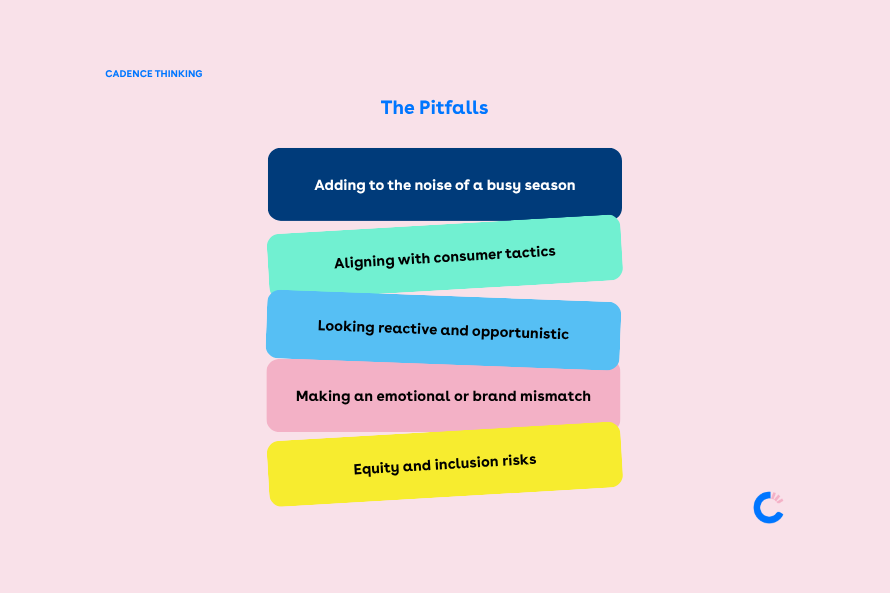
- Adding to the noise of a busy season?
- Aligning ourselves with consumer tactics?
- Looking reactive and opportunistic?
In this blog we’re going to help you think through the pros and cons of tying your campaign to a holiday and propose some solutions to get the best out of holiday marketing for your brand.
The Pros and Cons of Holiday-Linked Campaigns
Before jumping into a holiday ask, it is essential to weigh the benefits of holiday campaigns against the risks.
The Benefits
- Spend season: People are already spending, making them open to donation appeals.
- Heightened generosity: The holiday spirit encourages giving, kindness, and goodwill.
- Wider audience: Often people are more open to marketing around a holiday. This can expand the potential audience for your campaign to those unfamiliar with your brand.
- Positive brand building: Linking your brand to the holidays collective mood e.g., Mothers Day and appreciation.
- Loyalty: Campaigns tied to major holidays (e.g., Christmas, Anzac Day) attract faithful, annual donors.
- Time-bound and urgent: A short giving period (a month/weekend) creates urgency.
- Low barrier to entry messaging: Consumers quickly grasp the ask due to the holiday theme (e.g., food drives at Christmas-time).
- Brand partnerships: Holidays facilitate match-giving, corporate social responsibility goals, or media promotion. For example, corporate gift-matching for International Women’s Day.
- Peer to peer Ambassador campaigns: Time off or physical events (fetes, fun runs, Movember encourage volunteer involvement.
The Risks
- You’re competing with and adding to “The Noise”: Have you ever opened your inbox on October 31st, to find multiple emails with subject lines playing on ‘trick or treat’? Your message is competing with hundreds of other charities (not to mention brands!), many of whom have large advertising budgets. In addition, you end up contributing to the noise of many charities asking for money around holidays.
- Donor fatigue: If it’s a busy time of year, supporters can feel overwhelmed by constant requests, leading them to unsubscribe or stop opening emails. Once someone has unsubscribed from your emails it is quite hard to win them back.
- Higher costs: Advertising costs (CPC) typically spike during holiday seasons as you compete with both NFPs and commercial retailers.
- Misleading signals: For organisations like food banks, a heavy holiday focus may inadvertently signal that the need only exists during that season, causing a massive drop-off in support the rest of the year.
Our solutions for authentic holiday marketing
If you decide to move forward with a holiday-linked campaign, follow these principles to maintain your brand’s integrity:
1. Make it count
Don’t treat a holiday campaign as an afterthought to squeeze out extra donations. If you do it, make it one of your core brand campaigns. Put in the effort and creativity required for the messaging to stand up on its own, speaking deeply to the actual need you are fundraising for.
Example: The American Heart Association rebranded February (eg. Valentine’s Day) as American Heart Month. They pivot the visual language of hearts and romance toward physical heart health and CPR awareness.
2. Only use dates that align with your brand
Holidays have brands too. Some are fun and celebratory. Others are solemn and commemorative. It is important that the holiday you choose actually bolsters your brand rather than looking like an opportunistic grab. For example, if your organisation focuses on foreign aid, Halloween is a bit of a tenuous link; Harmony Day or a creative fundraising product like a forty hour famine might be more appropriate.
Example: The RSL’s Anzac Appeal works because it is spiritually aligned with Anzac Day. It centres on a solemn day of remembrance where buying a badge feels like an act of commemoration rather than a sales pitch.
3. Acknowledge your audience’s experience
Acknowledge the reality that holidays can be busy and expensive for your donors. Adjust your language and make the mechanism for giving as simple as possible. If you don’t have clear data to back up a large financial ask, consider using the holiday for awareness, goodwill, and donor retention instead.
Example: Save the Children’s Christmas Jumper Day turns a popular tradition into a low-effort, highly visual way to give. It’s easy for schools and workplaces to execute during a busy season.
4. The Alternative: create your own signature moment
If the traditional holiday calendar feels too crowded, consider creating a signature campaign linked to a specific date that you own. Successes like Movember, Dressember, and the Pink Test prove that you don’t need a national holiday to create a movement.
Alternatively, focus on a year round, always on awareness strategy. By providing content for them such as recipes from OzHarvest or heart health tips from the Heart Foundation, you build an audience that is receptive when you litter in your donation asks throughout the year.